VCCA – The Vietnam Logistics Forum 2025, themed “Vietnam Logistics – Rising into a New Era”, reflects the strong determination and strategic vision to accelerate the breakthrough of Vietnam’s logistics sector, positioning it as a key driver in enhancing national competitiveness in the new development phase.
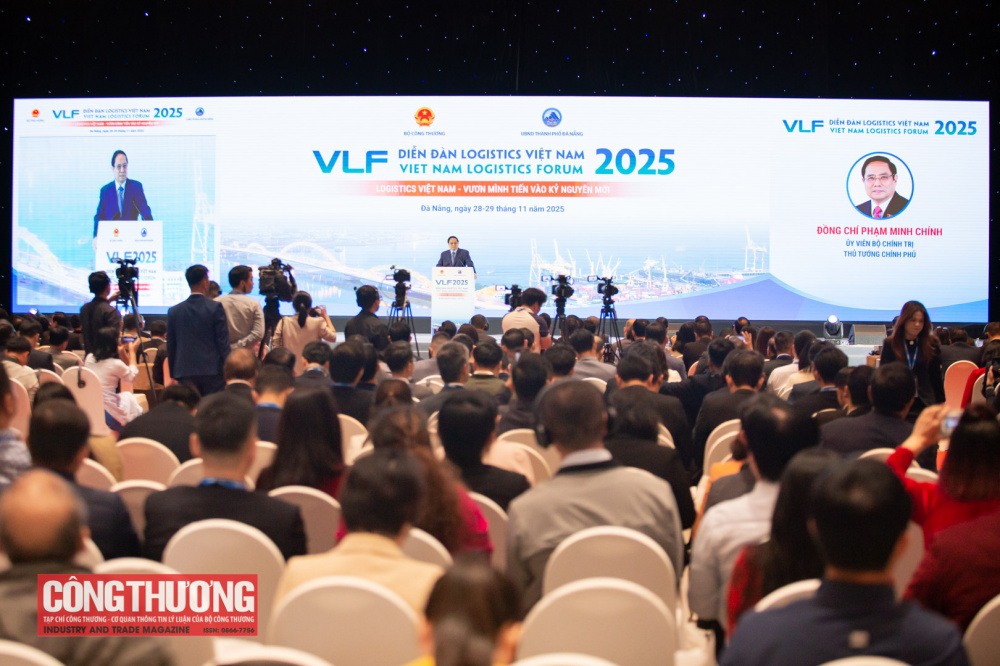
Prime Minister Phạm Minh Chính attended and delivered a keynote directive speech at the plenary session.
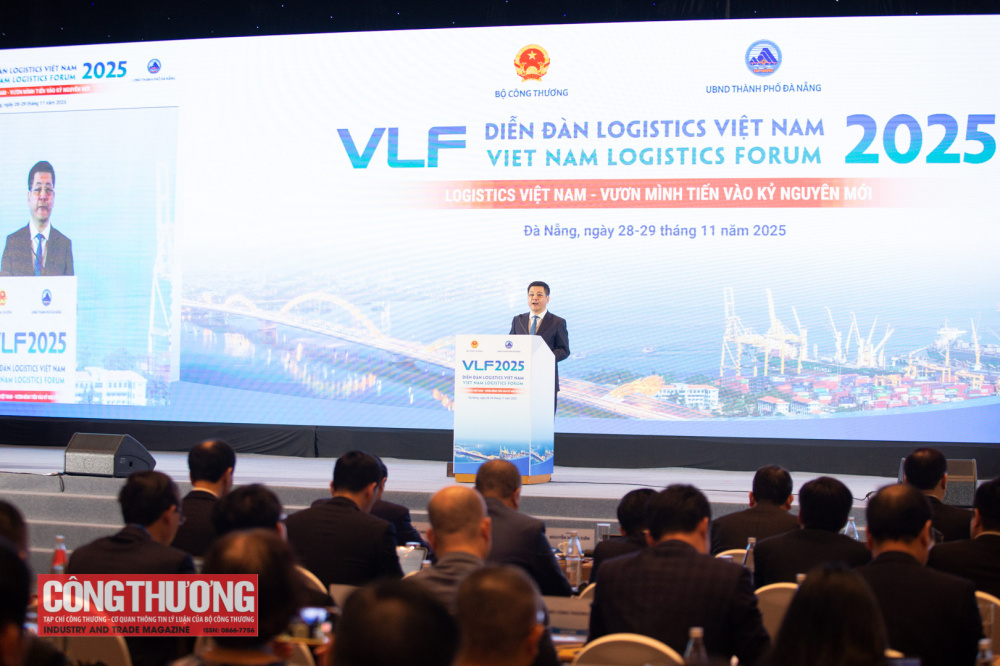
On the morning of November 29, 2025, in Da Nang City, the Ministry of Industry and Trade, in coordination with the Da Nang People’s Committee, organized the Plenary Session of the Vietnam Logistics Forum 2025 with the theme “Vietnam Logistics – Rising into a New Era.”
The forum welcomed Prime Minister Phạm Minh Chính, Minister of Industry and Trade Nguyễn Hồng Diên, Da Nang Party Secretary Lê Ngọc Quang, along with leaders of ministries, sectors, localities, representatives of international organizations, enterprises, business associations, and investors in logistics and related economic fields.
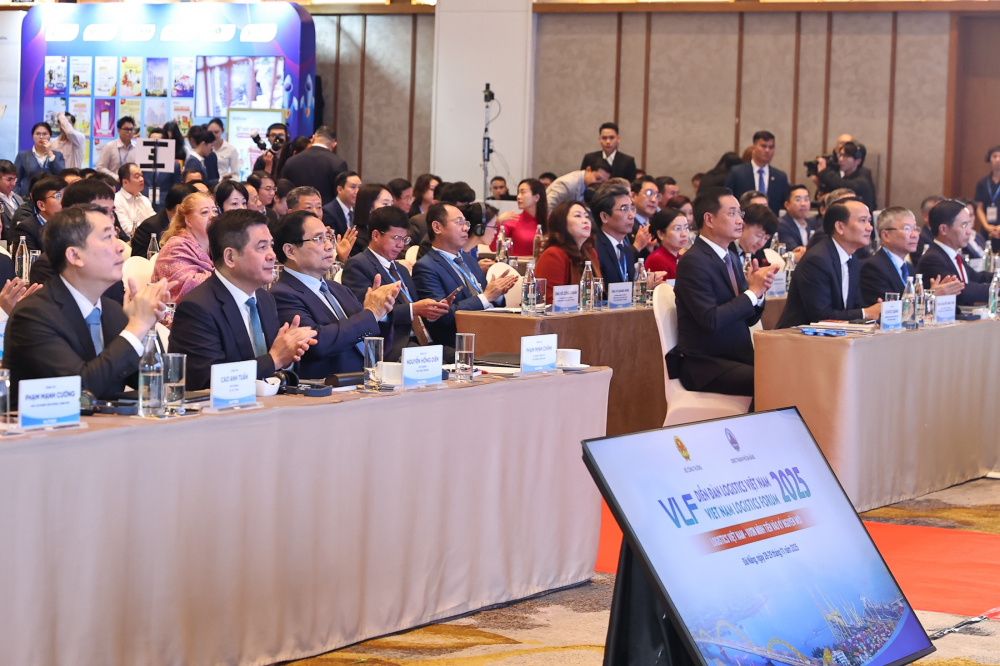
Prime Minister Phạm Minh Chính and Minister Nguyễn Hồng Diên joined delegates at the Vietnam Logistics Forum 2025.
Vietnam’s Logistics Sector Achieves Strong Growth
In his opening remarks, Minister Nguyễn Hồng Diên emphasized that logistics is a pivotal service sector, acting as the “lifeblood” of the economy — a bridge between production, circulation, consumption, import, and export — and one of the core pillars enhancing national competitiveness and promoting socio-economic development.
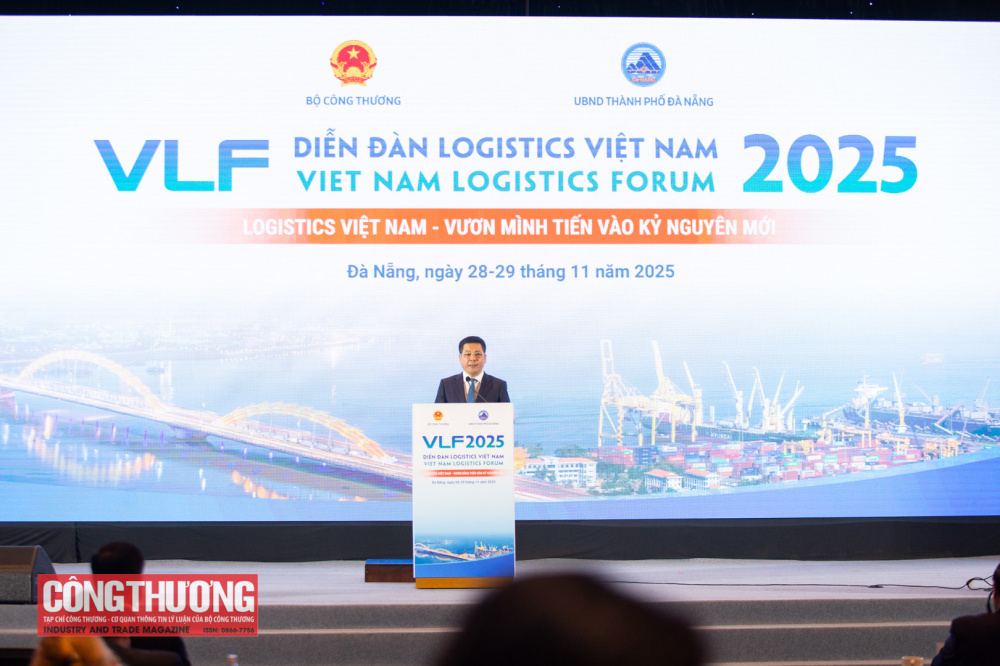
According to Minister Diên, Vietnam currently possesses favorable conditions to develop large-scale and modern logistics infrastructure.
Vietnam lies in one of the world’s most dynamic development regions, where trade flows are highly concentrated, with a highly open economy ranked 3rd in ASEAN and 32nd globally; among the Top 20 in international trade volume and Top 15 in FDI attraction. Vietnam also benefits from a large consumption market (both domestically with over 100 million people and internationally with nearly 6 billion consumers through 17 implemented FTAs). Over the past decade, import-export turnover and e-commerce have consistently grown at double-digit rates, making Vietnam one of the most potential markets for logistics development.
Additionally, Vietnam’s strategic location and strengths in deep-sea ports, international airports, expressways, and regional rail connections offer strong advantages for developing large-scale, modern logistics infrastructure.
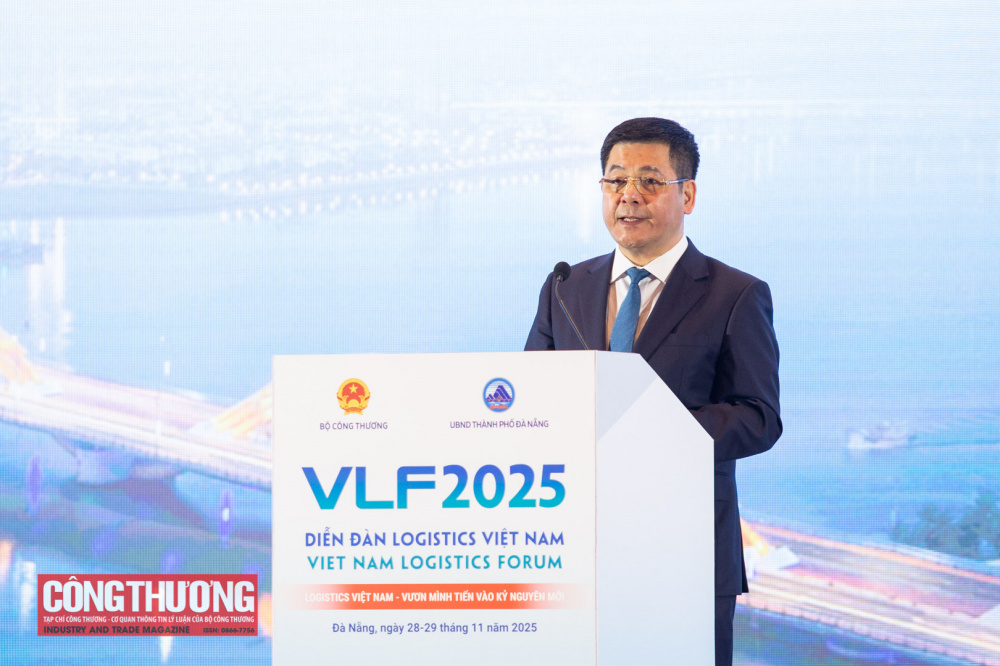
The Minister noted that with close and decisive direction from the Government and Prime Minister, proactive efforts from ministries, localities, and especially the logistics business community, the logistics sector has achieved impressive progress:
Average growth of 14–16% per year — more than double the global average; a market size of USD 45–50 billion (10% of GDP and 5% of total trade turnover); improving its reputation and position regionally and globally.
In 2025, Vietnam is ranked among the Top 10 emerging logistics markets, Top 4 in the region for logistics opportunity indicators, and Top 5 in ASEAN, Top 40 worldwide in logistics performance.
However, he noted persistent challenges: high logistics costs, weak regional connectivity, shortage of high-quality human resources, early-stage digital and green transformation, and lack of unified logistics data — all requiring strong, synchronized, and feasible solutions.
Entering a New Era of Technology, Innovation, and Sustainability
Vietnam is stepping into a new era dominated by technology, innovation, green transformation, digitalization, and deep international integration. Global economic and political volatility, shifts in supply chains, cross-border e-commerce, green standards, and intensifying major-power competition all present new challenges to logistics development.
The Ministry of Industry and Trade has recently submitted to the Prime Minister the Vietnam Logistics Development Strategy for 2025–2035, Vision to 2050.
The strategy sets ambitious goals for the next decade: building a sustainable, efficient, high-quality logistics sector with strong competitiveness, maximizing Vietnam’s advantages in global supply chains and value chains, gradually realizing the vision of Vietnam becoming a logistics-strong nation contributing significantly to industrialization and modernization. Administrative restructuring and regional consolidation also open space for logistics infrastructure development.
This year’s forum aims to signal the Government’s strong message: attracting investment into logistics, promoting new, feasible, and open policies to create breakthroughs for both economic development and the logistics service sector.
Lively Discussions and Strategic Insights
Delegates discussed the current state of Vietnam’s logistics sector; its potential, strengths, policies, and development orientations. Key presentations included:
– Vietnam Logistics: From Strategy to Breakthrough Opportunities
– Vietnamese Logistics Enterprises at the Turning Point of the Era
– Aspirations of Pioneer Enterprises Bringing Vietnam’s Logistics to the World
– Trends of Smart Logistics Development and Opportunities for Vietnam
– Promoting National Logistics via the Maritime Industry
Multiple Bright Spots in Logistics Development
In his directive speech, Prime Minister Phạm Minh Chính acknowledged key achievements:
-
Strong and stable growth: 14–16% annually, contributing 4.5–5% of GDP; ranked 43/139 globally in the 2023 LPI, Top 5 in ASEAN.
-
Reduced logistics costs: From over 20% of GDP (2014) to about 16% today.
-
Upgraded logistics infrastructure: Ports, airports, expressways, and logistics hubs in major economic regions.
-
Growing enterprise ecosystem: Over 34,000 logistics companies; increased participation in global supply chains; expanding use of advanced technology.
-
FTA-driven advantages: FTAs create favorable conditions for international logistics development across markets, infrastructure, supply chains, investment, and workforce.
-
Contribution to trade growth: Supporting Vietnam’s estimated international trade volume of USD 900 billion in 2025.
Shifting from Fragmented Support to Modern, Smart Logistics
Despite progress, the Prime Minister highlighted six bottlenecks:
– High logistics costs
– Weak regional connectivity
– SME-dominant logistics sector
– Lack of national-level logistics hubs
– Inadequate regulatory framework
– Limited digital and green transformation, lack of logistics data centers
He emphasized the need to shift from small-scale support activities to developing modern, smart logistics as a key economic sector, enhancing national and regional connectivity, and adopting a governance mindset of “facilitating and serving” in alignment with the new National Logistics Strategy 2025–2035.
Eight Strategic Task Groups
To achieve long-term goals — including maintaining 15–16% annual growth and reducing logistics costs to global averages — the Prime Minister outlined 8 key task groups:
-
Improve institutions and policies, ensuring transparency, feasibility, and reduced administrative burdens.
-
Develop smart, green, digital logistics infrastructure, connecting logistics databases to the National Single Window.
(The remaining task groups follow in the full directive.)